


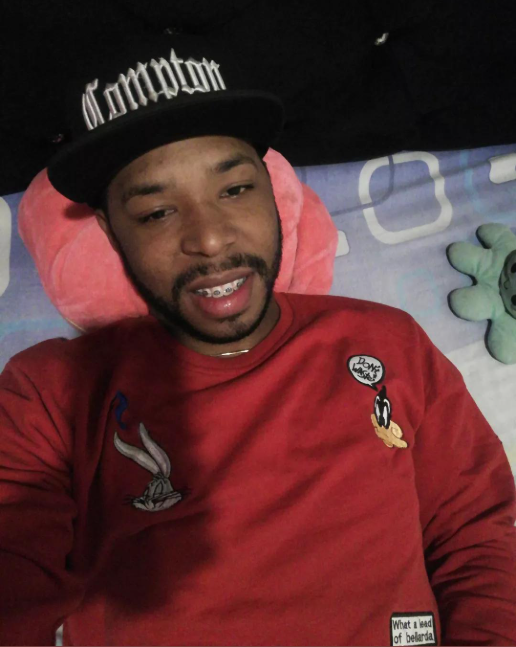
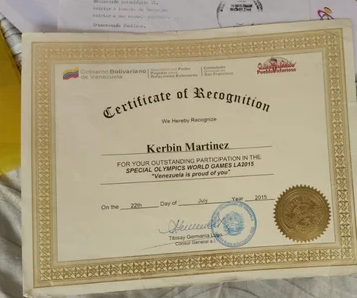
Kerbin Antonio Martínez Vargas, 27, is from Carabobo, Venezuela. He grew up in a modest home with his parents, grandparents, and siblings. Diagnosed with epilepsy as a child, Kerbin also developed an intellectual disability that made reading and memory difficult. Despite challenges, he became a talented athlete and represented Venezuela in the Special Olympics World Games in Los Angeles in 2015.
After school, Kerbin worked collecting rubble and later joined his brothers in Colombia, working in a sugar cane factory. To better support his two children, he traveled to the U.S. in 2024, entering legally through a CBP One appointment. He settled in Arizona, working as an Uber driver.
In early 2025, Kerbin was arrested by ICE at a gas station. He was later told he was being accused of gang affiliation because of an insect tattoo on his hand — a link experts say is baseless. On March 14, Kerbin called his mother, Leida, saying he would be deported to Venezuela. But he never arrived. Days later, his name appeared on a leaked list of 238 Venezuelans sent to CECOT prison in El Salvador.
Leida eventually saw him in a video of detainees, recognizing his gestures and tattoo. She has since joined other families in protests, letters, and public appeals. She fears for Kerbin’s health, especially due to his seizure condition and emotional sensitivity under stress.
Leida also worries about Kerbin’s young son, who often asks for his father. “I just tell him, ‘He’s traveling,’” she said. “I can’t tell him he’s in a prison camp.”
Kerbin Antonio Martínez Vargas, 27, is from the Carabobo state of Venezuela. He grew up in a small house filled with family, his parents, grandparents and four siblings. According to his mother, Leida Vargas. He never had any trouble with the law on any contact with gangs.
When Kerbin was three years old, he started having scary episodes where he would vomit and then pass out. His mother took him to the doctor, and tests showed that he had “small spots on his brain.” He was diagnosed with epilepsy and his episodes were called silent or absence seizures. The seizures became more frequent as he got older, and one nearly took his life when he became unconscious in a swimming pool.
When Kerbin he was in early elementary school, his mother and the doctors discovered that Kerbin’s seizures were triggered by strong negative emotions like sadness, fear and anger. Together, Kerbin and his mom learned the signs of an oncoming seizure and how to prevent it.
“When he felt it coming, he would stay calm in one place and say, ‘Mom, my spirit is leaving my body, something is leaving my body.’ I tried to hold him, but I couldn’t. But I remained calm, calm, calm, calm. He learned to control it so that it he wouldn’t lose consciousness,” Leida said. Kerbin also took medication for his seizures but stopped when he was 19 years old “because I’m a man now,” Leida remembered him saying.
Kerbin started his education in regular school, but his seizures caused damage to his brain that prevented him from retaining information. “He could do things; put them together and take them apart, but he couldn’t retain what he had learned. Reading was difficult for him. He still can’t read well, and he can’t remember his ID number,” Leida said. So, when he was seven years old, Kerbin diagnosed with an intellectual disability and moved to a school for kids with disabilities.
At his new school, Kerbin was identified as a strong athlete. He was chosen for the Venezuelan Special Olympics and started training and competing in Venezuela as a runner. When he was 17 years old, Kerbin was chosen as part of the Special Olympics team that represented Venezuela in the World Games in 2015. He and his team along with his teacher and other chaperones flew to Los Angeles, and Kerbin finished fifth place in one of his events.
When Kerbin finished school a year later, he got a job collecting rubble in his town. A few years later, he went to Colombia with his brothers to find better pay and worked in a factory processing sugar cane. He had two children that he needed to support, and his wages weren’t sufficient to help their mothers with their care.
Kerbin had a relative who traveled to the US in 2023 and arranged for him to follow, and in 2024, Kerbin made the dangerous overland trip to the US southern border. The trip was nerve wracking for his mother who worried about his safety.
“When he got to Necoclí, Colombia he spent about three days in the jungle, imagine, three days of anguish. I found out after he had already arrived in Panama. After Panama, of course, he was on the journey, but I knew how he was doing, walking, hiding, walking, and so on. You know what it’s like when you have nothing, when you’re undocumented. He saw the buses but walked,” Leida said.
When he arrived in Mexico, Kerbin got some help and was able to make a CPB-One appointment, and he entered legally into the US on September 4, 2024. His relative paid for a bus ticket, and he traveled to Arizona where he found a place to stay and worked as an Uber driver.
Five months later, Kerbin was at a gas station when he was arrested by ICE. “He was filling up the car he was using with gas, and they caught everyone who was there. And then he says, ‘Mom, when I realized what was happening, I was in an immigration facility. They didn’t give me a chance, Mom, not even to defend myself or anything,’” Leida remembers him saying.
Later Kerbin learned that he was being accused of being a member of the gang, Tren de Aragua, because of a tattoo of an insect on his hand. There are no connections between membership in that gang to tattoos, according to academics and journalists who have extensively studied Tren de Aragua.
On March 14th, 2025, Leida got a call from Kerbin saying he was going to be deported back home to Venezuela the next day, but on the 15th, he called again to say there had been a delay with the planes, so they hadn’t left yet. He said they hadn’t given him any food that day.
Kerbin’s family waited but no planes arrived in Venezuela. Leida heard about the videos of the men arriving from the US to the maximum-security prison, CECOT, in El Salvador, but she didn’t see her son in the videos. They didn’t get confirmation that Kerbin was in El Salvador until the initial list of 238 names was leaked by the media and Kerbin’s name was on the list.
Leida did see her son in the videos published in May by One America Network. “His reaction to stress is to laugh. And I see that he’s holding his hand up to his face in the way I know. Also, there is his tattoo on his hand, and I say to my husband, there he is, he is mine,” she said.
Leida has joined up with other families of the Venezuelans sent to CECOT, and they protest, write letters and appeal to anyone who they think might help get them their sons back.
“I wouldn’t wish this on anyone. You don’t even know how they are in there. I had this weird pain in my rib, so I’m going to see if I go to the doctor. It’s happened like three times already, where I feel like I’m going to pass out, but I have to keep going because of him.” Leida said. She worries about her son’s health in that prison, if he will be able to stay calm if he is tortured.
Leida’s grandchild who is Kerbin’s older child, a boy of five. is sensitive and often asks about his dad. Leida tells him “‘No, your dad isn’t here, he’s traveling.’ I can’t tell him that his dad is in a prison camp, he doesn’t know anything about these things.”
Kerbin Antonio Martínez Vargas, de 27 años, es del estado Carabobo, Venezuela. Creció en un hogar modesto con sus padres, abuelos y hermanos. Fue diagnosticado con epilepsia en su infancia y también desarrolló una discapacidad intelectual que le dificultaba la lectura y la memoria. A pesar de estos desafíos, se convirtió en un atleta talentoso y representó a Venezuela en los Juegos Mundiales de Olimpiadas Especiales en Los Ángeles en 2015.
Después de terminar la escuela, Kerbin trabajó recogiendo escombros y luego se unió a sus hermanos en Colombia, donde trabajó en una fábrica procesadora de caña de azúcar. Para poder mantener a sus dos hijos, viajó a Estados Unidos en 2024, ingresando legalmente mediante una cita de CBP One. Se estableció en Arizona y trabajó como conductor de Uber.
A comienzos de 2025, Kerbin fue arrestado por ICE en una gasolinera. Luego le informaron que lo acusaban de pertenecer a una pandilla debido a un tatuaje de un insecto en su mano, una supuesta prueba que, según expertos, no tiene fundamento. El 14 de marzo, Kerbin llamó a su madre, Leida, y le dijo que sería deportado a Venezuela. Pero nunca llegó. Días después, su nombre apareció en una lista filtrada de 238 venezolanos enviados a la prisión CECOT en El Salvador.
Leida finalmente lo vio en un video de los detenidos, reconociendo sus gestos y su tatuaje. Desde entonces, se ha unido a otras familias en protestas, cartas y llamados públicos. Teme por la salud de Kerbin, especialmente por su condición de epilepsia y su sensibilidad emocional al estrés.
También le preocupa el hijo pequeño de Kerbin, que pregunta constantemente por su padre. “Solo le digo: ‘Tu papá está de viaje’”, contó Leida. “No puedo decirle que está en un campo de prisioneros.”
Kerbin Antonio Martínez Vargas, de 27 años, es del estado Carabobo, Venezuela. Creció en una casa humilde llena de familia: sus padres, abuelos y cuatro hermanos. Según su madre, Leida Vargas, nunca tuvo problemas con la ley ni vínculos con pandillas.
Cuando tenía tres años, Kerbin comenzó a tener episodios alarmantes: vomitaba y luego perdía el conocimiento. Tras varios exámenes, los médicos encontraron “pequeñas manchas en su cerebro” y lo diagnosticaron con epilepsia. Sus crisis, clasificadas como ausencias, se volvieron más frecuentes con el tiempo, y una casi le costó la vida cuando se desmayó en una piscina.
En sus primeros años de escuela, Leida y los médicos descubrieron que las crisis de Kerbin eran provocadas por emociones negativas intensas como la tristeza, el miedo o la rabia. Madre e hijo aprendieron a identificar los signos de una crisis inminente y cómo evitarla.
“Cuando lo sentía venir, se quedaba quieto en un lugar y decía: ‘Mamá, mi espíritu se está saliendo del cuerpo, algo se está saliendo del cuerpo’. Yo trataba de sostenerlo, pero no podía. Aun así, me mantenía tranquila, tranquila, tranquila, tranquila. Él aprendió a controlarlo para no perder el conocimiento”, contó Leida. Kerbin tomaba medicamentos, pero los dejó a los 19 años diciendo: “ya soy un hombre”.
Kerbin comenzó en una escuela regular, pero sus crisis afectaron su capacidad de retención. “Él podía armar y desarmar cosas, pero no podía recordar lo aprendido. Leer le cuesta mucho. Aún no lee bien y no puede memorizar su número de cédula”, dijo su madre. A los siete años, fue diagnosticado con discapacidad intelectual y trasladado a una escuela especial.
Allí, fue identificado como buen atleta. Fue seleccionado para representar a Venezuela en las Olimpiadas Especiales, entrenando como corredor. En 2015, a los 17 años, compitió en los Juegos Mundiales en Los Ángeles, logrando un quinto lugar en una de las pruebas.
Después de terminar sus estudios, trabajó recogiendo escombros. Años más tarde, se fue a Colombia con sus hermanos y trabajó en una fábrica de procesamiento de caña de azúcar. Tuvo dos hijos y deseaba ayudarlos económicamente, pero su sueldo no era suficiente.
Un familiar que había migrado a EE. UU. en 2023 organizó su viaje. En 2024, Kerbin emprendió la peligrosa travesía terrestre hacia la frontera sur. Su madre, angustiada, temía por su seguridad.
“Cuando llegó a Necoclí, Colombia, pasó tres días en la selva… imagínate, tres días de angustia. Me enteré cuando ya había llegado a Panamá. Luego supe que seguía caminando, escondiéndose, caminando otra vez. Así es cuando no tienes papeles. Veía los buses, pero iba a pie”, relató Leida.
Al llegar a México, recibió ayuda y pudo agendar una cita por CBP-One. Entró legalmente a EE. UU. el 4 de septiembre de 2024. Su familiar le pagó un pasaje en bus hasta Arizona, donde se instaló y trabajó como conductor de Uber.
Cinco meses después, fue arrestado por ICE en una gasolinera. “Estaba echando gasolina al carro que usaba, y detuvieron a todos los que estaban allí. Luego me dijo: ‘Mamá, cuando me di cuenta, ya estaba en un centro de detención. No me dieron oportunidad, mamá, ni siquiera de defenderme’”, recordó Leida.
Más tarde, supo que lo acusaban de pertenecer al Tren de Aragua por un tatuaje de un insecto en la mano. Sin embargo, académicos y periodistas que han investigado a la banda afirman que los tatuajes no son prueba de afiliación.
El 14 de marzo de 2025, Leida recibió una llamada: Kerbin le dijo que al día siguiente sería deportado a Venezuela. Pero el día 15 volvió a llamar: los vuelos se habían retrasado y no le habían dado comida ese día.
La familia esperó, pero nunca llegaron vuelos a Venezuela. Leida escuchó rumores de que los deportados habían sido enviados a la prisión de máxima seguridad CECOT en El Salvador, aunque no vio a su hijo en los videos. Días después, una lista filtrada con 238 nombres confirmó que Kerbin estaba entre ellos.
En mayo, Leida sí logró ver a su hijo en un video publicado por One America Network. “Su reacción al estrés es reírse. Y vi cómo se llevaba la mano a la cara, como siempre lo hace. También reconocí su tatuaje. Le dije a mi esposo: ‘Ahí está, ese es mi hijo’”.
Ahora, Leida se ha unido a otras familias de venezolanos en CECOT para protestar, escribir cartas y pedir ayuda a quien pueda devolverles a sus hijos.
“No se lo deseo a nadie. Ni siquiera sabemos cómo están ahí adentro. A veces siento un dolor raro en las costillas, he pensado ir al médico. Ya me ha pasado tres veces, como si me fuera a desmayar. Pero sigo adelante, por él”, dijo Leida. Le preocupa la salud de su hijo y teme que no pueda mantenerse tranquilo si es torturado.
Su nieto mayor, de cinco años, es muy sensible y pregunta constantemente por su papá. Leida le responde: “Tu papá no está aquí, está viajando”. No tiene el corazón para decirle que su padre está en un campo de prisioneros.


Leave a Reply